The short answer
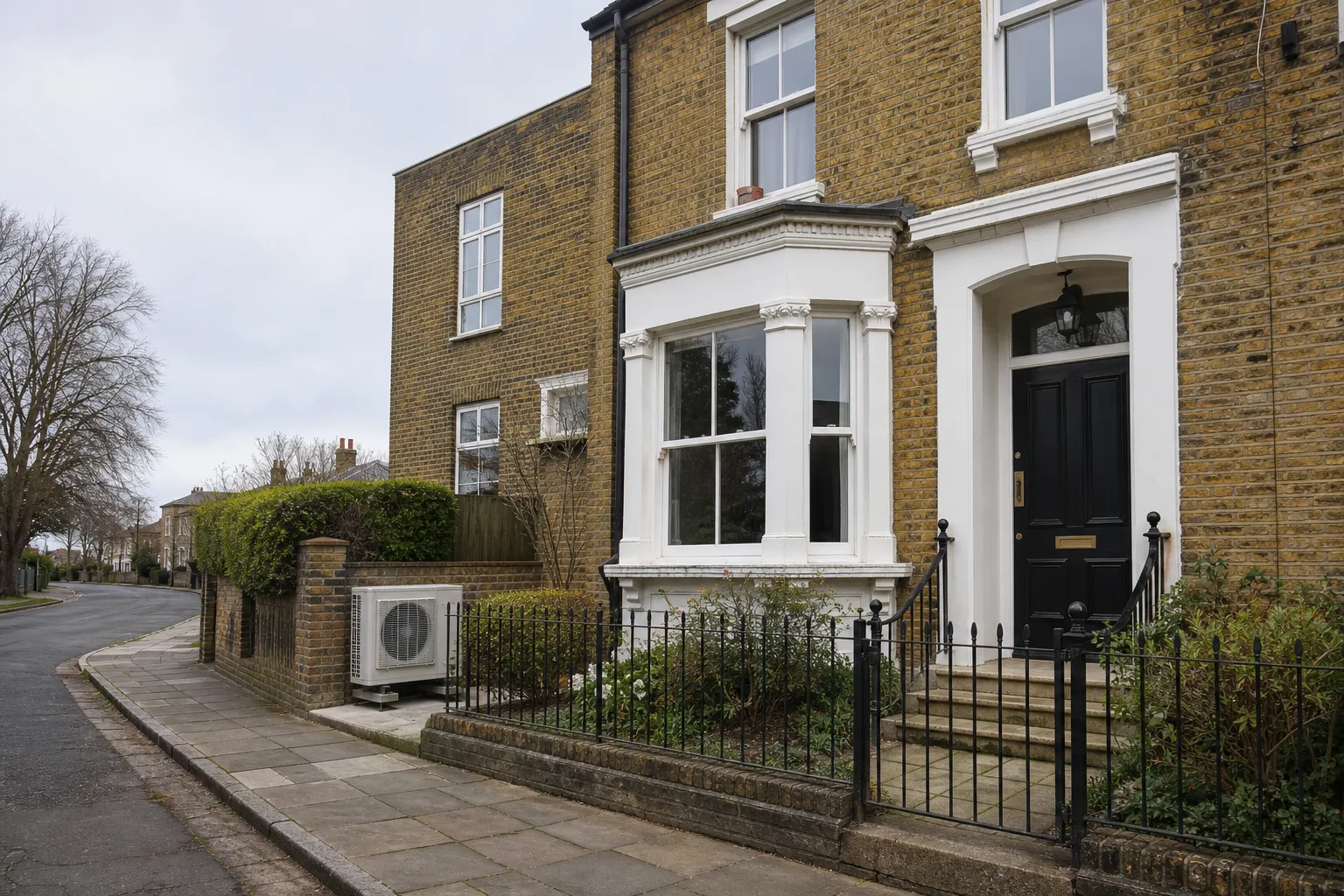
A terraced house is often a good home for a heat pump. Shared walls with the neighbours act like insulation, so a mid-terrace usually loses less heat than a semi or detached house of the same floor area, which means a smaller heat pump and lower running costs. The common sticking points are practical: where the outdoor unit goes, how close it sits to a neighbour’s window, and where the hot water cylinder fits. Flats are harder. Space, access, the lease and planning can all get in the way, and an upper floor flat with no balcony or roof access may not suit an air source heat pump at all.
Why terraces can work well
Heat loss drives everything in heat pump design. Each wall a terrace shares with a heated neighbour is a wall that barely loses heat. An end terrace has one shared wall, a mid-terrace two. That often means:
- A smaller heat pump than people expect for the floor area.
- Fewer radiators that need upsizing.
- Lower running costs than a detached house of similar size.
The exception is the older solid-walled terrace with draughty floors and single glazing. The shared walls still help, but the front and back walls, roof and floor can lose a lot. Our guide on heat pumps in older houses covers what to sort first.
Finding space for the outdoor unit
An air source heat pump’s outdoor unit is roughly the size of a large suitcase on its side, and needs clear air around it. In a terrace, the usual positions are:
| Position | Works well when | Watch out for |
|---|---|---|
| Back yard, against the rear wall | There is a metre or so of clear space | Distance to the neighbour’s window, drainage for condensate water |
| Rear extension wall | The extension wall faces the yard | Bracket mounting and vibration into the wall |
| Side return or alley | The space is private and not a shared access | Blocking access, airflow in tight gaps |
| Front of the house | Rarely, where nothing else works | Planning rules, appearance, conservation areas |
Most installers prefer a ground position on anti-vibration feet. Wall brackets are possible but can pass vibration into the house.
Noise and the neighbours
In terraces, neighbours are close. A modern heat pump is designed to be quiet, but it is not silent, and the fan runs harder in cold weather. Under permitted development in England, the unit has to meet a noise limit at the nearest neighbour’s window or door, which the installer checks with a standard calculation. In a tight yard, that can decide where the unit goes. Our noise and planning guide explains the rules in general terms.
Telling your neighbours before the work is sensible. It costs nothing and avoids surprises.
Indoors: the cylinder question
Most heat pump systems store hot water in a cylinder, because a heat pump cannot heat water on demand like a combi. If you are coming from a combi, you need to find a home for one. Options in a terrace include:
- The old airing cupboard, if it is still there.
- A loft, if the floor is boarded and strong enough.
- Under the stairs or in a utility area.
- A compact or slimline cylinder in a bedroom cupboard.
A cylinder is usually included in a heat pump installation price. Ask your installer what size they plan and where it will go before you sign.
Flats: what makes it harder
Flats bring extra layers of permission and practical limits:
- The lease. Most leases forbid changes to outside walls, roofs or shared areas without the freeholder’s consent. Get that in writing first.
- Planning. Permitted development rights for heat pumps generally apply to houses, so a flat is more likely to need planning permission. Check with your council.
- Space. Balconies may be too small or the wrong shape for airflow, and fixing units to balconies is often not allowed.
- Pipe runs. Long runs from a roof or ground position to an upper floor add cost and complexity.
The easiest flat is one on the ground floor with its own garden or yard. Some newer blocks are designed for communal heat pumps, or for small individual units, which takes most of this away.
Costs in terraces and flats
A typical air source heat pump costs £11,000 to £14,500 before any grant. In England and Wales, the £7,500 Boiler Upgrade Scheme grant brings a typical job to £3,500 to £7,000 (typical, checked October 2026). Smaller terraces with low heat loss can sit toward the bottom of the range. Flats with long pipe runs or difficult access can cost more. See the full breakdown in our heat pump installation cost guide.
Leaseholders: you will normally need the freeholder’s consent for the outdoor unit and any wall or roof work. Get it in writing before you book a survey, or the job can stall.
When to choose something else
If the only possible spot is too close to a neighbour’s window, there is no room for a cylinder, or the freeholder will not agree, a heat pump may not be practical. A new combi or system boiler is the usual fallback for terraces and flats on gas; see our boiler replacement hub for prices. City Boiler connects you with independent MCS-certified installers who will tell you, after a proper survey, whether your home can take one.
Common questions
Can you put a heat pump on a mid-terrace house?
Usually, yes. Most mid-terraces have a back yard or garden with enough space for an outdoor unit, and shared walls mean they lose less heat than a detached house of the same size. The main things to check are space, distance to the neighbours' windows and where the pipework will run.
Can I have a heat pump in a flat?
Sometimes. A ground floor flat with its own outside space is the easiest case. Upper floor flats often need a balcony, a flat roof or a wall position, plus permission from the freeholder and possibly planning permission.
Do I need my neighbours' permission for a heat pump?
Not usually for a house where permitted development applies, though it is good manners to tell them. In a flat, you will normally need the freeholder's or management company's consent under your lease, and possibly planning permission.
Where does the hot water cylinder go in a small home?
Most heat pump systems need a cylinder. In a terrace it often goes where an old cylinder or airing cupboard was, or in a loft or under-stair space. Compact cylinders and some all-in-one indoor units help where space is tight.